

Route description
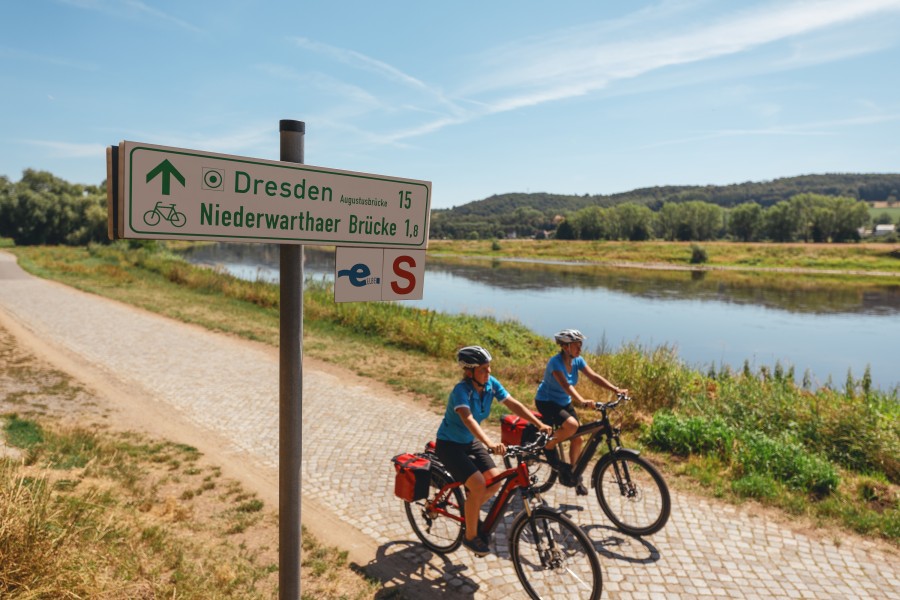
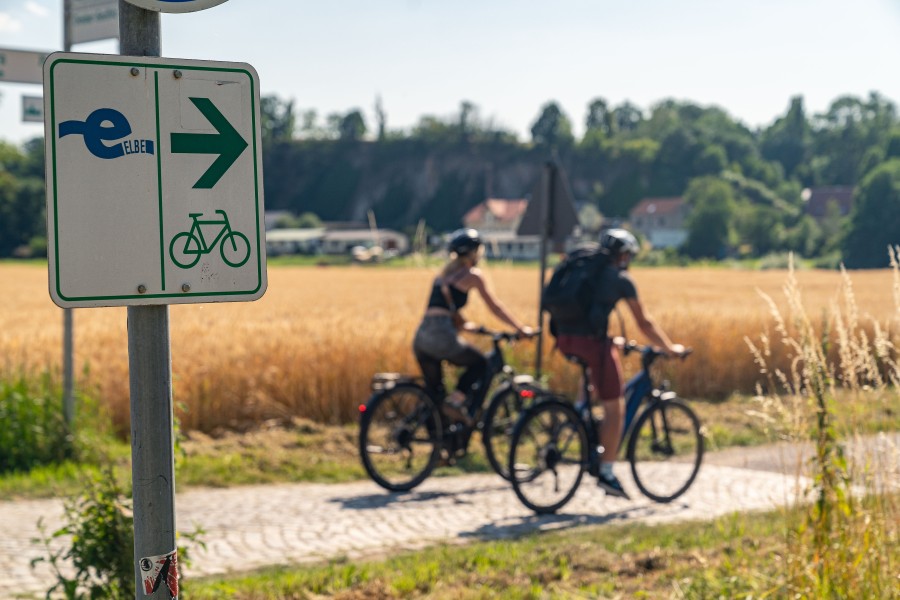
The Elbe Cycle Route follows the Elbe River from its source in the Czech Giant Mountains all the way to where it meets the North Sea near Cuxhaven.
The river itself stretches just under 1,100 kilometers. The cycle route, however, runs a little longer, roughly 1,270 kilometers in total, since it doesn't always stick to the riverbank and includes a detour along the Vltava River to Prague on the Czech side. Of that distance, 860 kilometers lie within Germany and 410 kilometers in the Czech Republic.
The route connects four national parks, the Wadden Sea, Saxon Switzerland, Bohemian Switzerland, and the Giant Mountains, along with the UNESCO Biosphere Reserve Elbe River Landscape and major cities like Hamburg, Magdeburg, Dresden, and Prague. Anyone looking to complete the full route in one go should plan for at least 14 days. In the 2025 ADFC Cycling Travel Analysis, the Elbe Cycle Route was once again voted Germany's most popular long-distance cycling route.
From North Sea Dikes to the Harbor Metropolis: Cuxhaven to Hamburg
This gentle opening stretch of around 140 km takes you on a relaxed ride through the North Sea coastline, sweeping windswept marshlands, sturdy dikes, and vast nature reserves. You set off from Cuxhaven's old fishing harbor, watching ships come in and curious seals lounging on the sandbanks, then pedal through idyllic fishing villages like Nordholz and glide past the Wadden Sea National Park (UNESCO World Heritage Site), where low tide invites you to hunt for shells or spot seabirds like oystercatchers and shelducks.
From there, the route continues through Otterndorf with its charming half-timbered houses and Fredenbeck with its rugged Elbe dikes, before arriving in Hamburg. Here you'll find the world's largest container port, towering cranes and cruise ships dominating the skyline, the red-brick Speicherstadt warehouse district, another UNESCO World Heritage Site, with its maze-like canals and historic storehouses, the glass-clad Elbphilharmonie concert hall for an unforgettable evening, the vibrant Reeperbahn with its buzzing nightlife, and the harbor quarter with the Maritime Museum and the legendary fish market, a must for any food lover.
Through Meadow Landscapes to the Cathedral City: Hamburg to Magdeburg
This middle section covers around 320 km and takes you across the gentle North German Plain, with its sweeping Elbe meadows, dense floodplain forests, and idyllic nature trails running close to the water's edge. Along the way, you'll pass through Lüneburg, a medieval old town literally shaped by its salt-mining past, complete with historic salt warehouses and fragrant herb gardens, the Hanseatic town of Lauenburg with its picturesque castle hill, half-timbered houses, and stunning views over the Elbe, and Wittenberge, a charming gateway town on the border with Brandenburg.
Natural highlights like the Middle Elbe Nature Park, with its lush river meadows, herds of wild horses, and opportunities for canoeing adventures, alternate with the Drömling Nature Park and its hauntingly beautiful moorland. The section's final destination, Magdeburg, doesn't disappoint: the city impresses with its magnificent Gothic Cathedral of Saints Maurice and Catherine (UNESCO World Heritage Site), a unique riverside fortress landscape, a modern Elbe bridge complex, and traces of a rich and lively industrial port history.
From Magdeburg to Dresden: Baroque Splendor and Wine Country
This culturally rich section of around 390 km seamlessly weaves together lush Elbe meadows, sun-drenched vineyards, and dazzling Renaissance and Baroque gems. Leaving Magdeburg, you glide through Dessau-Wörlitz's extraordinary UNESCO Garden Kingdom, a utopian ensemble of English-style parklands, the neoclassical Wörlitz Palace, the picturesque Gothard Cottage, and an intricate network of canals.
In Lutherstadt Wittenberg, the Castle Church, where Luther famously nailed his theses, along with the Melanchthon House and the Reformation Trail make for a compelling stop, before Torgau comes into view with its imposing Renaissance castle Hartenfels, once a guest residence of Luther and the site of the first purpose-built Protestant church.
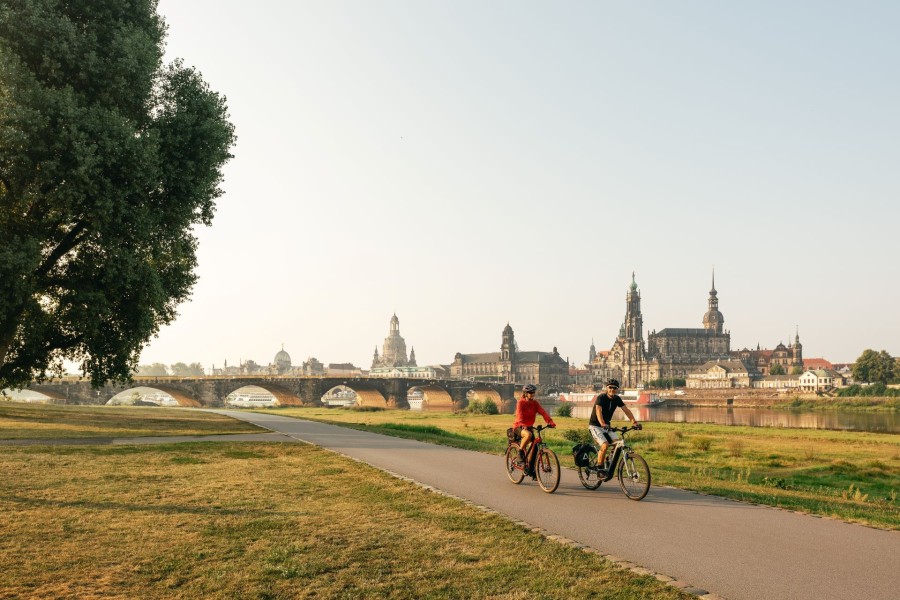
Riesa tempts with its cathedral palace and lively Elbe festivals, while Meissen presides over the river as the porcelain city, home to a thousand-year-old manufactory, a Gothic cathedral, and the terraced vineyards of the Saxon Wine Route. Dresden crowns it all as the "Florence of the Elbe", with the reconstructed Frauenkirche, the magnificent Zwinger Palace and its world-renowned art gallery, the Semperoper, the Royal Palace, and the sweeping Baroque bend of the Elbe.
From Dresden to Prague to the Elbe Source: Rock Labyrinths and the Romance of the River's Origins
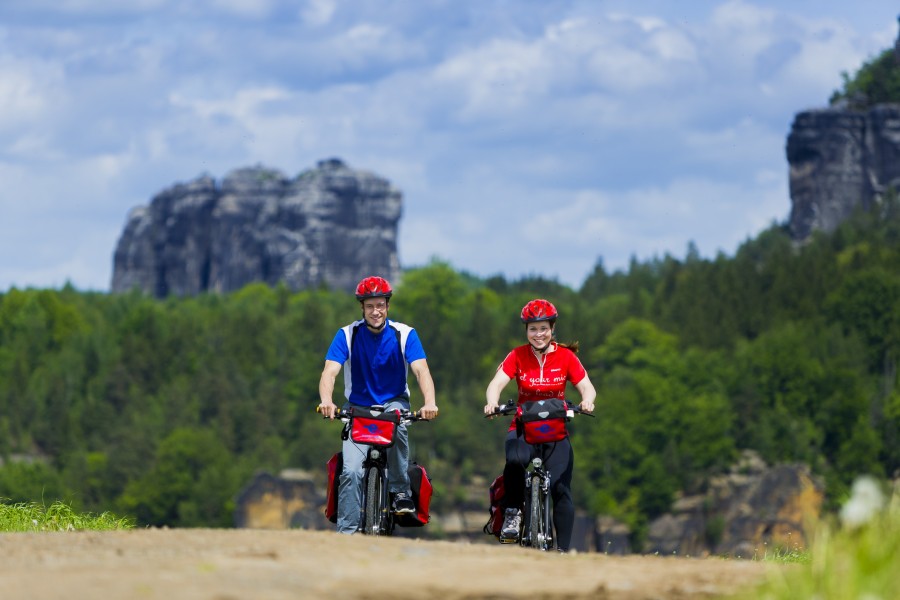
This is the most demanding section of the route, around 430 km, sweeping you from the flat riverbanks into the Elbe Sandstone Mountains and the Bohemian Elbe region, with climbs reaching up to 1,383 m, trails, and breathtaking panoramic views. Leaving Dresden, the route passes through Saxon Switzerland to the iconic Bastei Bridge with its 194-step panorama, the commanding Königstein Fortress, the largest hilltop fortress in Europe, with 2.5 km of pathways and a historic 16th-century well, the rugged Schrammsteine rocks with their via ferrata routes, the Lilienstein, and sun-soaked vineyards along the way.
Prague (UNESCO World Heritage Site) delivers in every sense: the Charles Bridge with its 30 statues and magical sunset atmosphere, Prague Castle, the largest castle complex in the world, home to St. Vitus Cathedral, the Old Town with the Týn Church and the mesmerizing Orloj astronomical clock, the charming Lesser Quarter, and sweeping views over the Vltava. The route then continues to the Theresienstadt fortress, now a garrison town and memorial site, on to Ústí nad Labem with its dramatic Střekov mesa and castle, through the horse-breeding country around Roudnice with its Baroque palace, and Mělník, the wine capital of Bohemia.
In the Bohemian Paradise (Český ráj UNESCO Geopark), rock labyrinths, stalactite caves, and medieval castles like Hrubá Skála and Trosky await, before the Krkonoše National Park brings the journey to a wildly romantic close, with dense spruce forests, alpine meadows, waterfalls, and the Elbe's source at Labská louka (a moorland spring at 1,383 m, marked by a memorial stone, with the option to hike up to Sněžka).
Where to eat
All along the Elbe Cycle Route, a fantastic variety of places to eat and drink await, from fresh North Sea specialties to Saxon wine treasures, everything perfectly suited to each stage of the journey. Many hosts now offer regional organic produce, cyclist-friendly rest stops, and luggage forwarding services to keep your ride stress-free.
On the Cuxhaven–Hamburg stretch, treat yourself to shrimp sandwiches and fish rolls at the harbor or hearty pickled herring at a Wadden Sea café, while Hamburg's famous fish market at sunrise delivers breakfast eels and live music in equal measure.
Between Hamburg and Magdeburg, look out for Lüneburg Heath lamb and salty snacks along the way, with dark Elbe beer and sausages waiting in Magdeburg's traditional brewhouses.
The Magdeburg–Dresden section brings Meissen wine tastings in half-timbered cellar taverns, lively Elbe festivals in Riesa with grilled sausages, and Dessau-style Gose beer served in parkside guesthouses.
And on the final Czech stretch, savor Mělník wines from Bohemia's vine country in rustic taverns, tuck into goulash with bread dumplings near the Charles Bridge in Prague, or warm up with hearty dumpling soup in a cozy Giant Mountains inn.
Interesting facts
- With an overall length of 1,208 km the bike trail is currently the longest bike trail in Germany available on TouriSpo.
- Elevated between 0 m and 1,297 m, the bike trail is among the 3 highest elevated bike Trails in Germany. You're facing an uphill climb of 799 vertical meters on this bike trail. This makes the bike trail one of the 10 bike Trails with the most ascent in Germany.
- This moderate bike trail is perfect for the whole family.
- If you get hungry along the way, there are places to rest and get food. Nevertheless it’s recommended to also have enough water and food in your backpack when hiking or biking.
Highlights of the tour
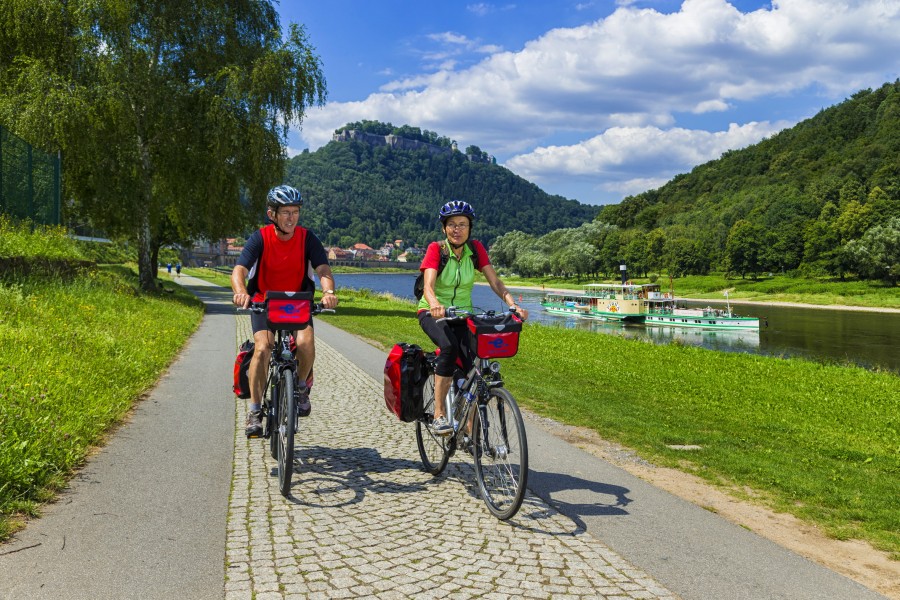
The Elbe Cycle Route is packed with highlights that connect nature and culture all the way from the North Sea to the river's source.
Among the standout stops are Hamburg's Speicherstadt warehouse district and Elbphilharmonie, the Middle Elbe Biosphere Reserve with its sweeping floodplain landscapes, Magdeburg's Gothic cathedral, and the Dessau-Wörlitz Garden Kingdom. Further along the route lie Wittenberg's Reformation sites, Meissen with its legendary porcelain manufactory, and Dresden with the Zwinger, the Frauenkirche, and the Semperoper. Further east, the Saxon Switzerland region impresses with the Bastei and Königstein Fortress, Prague captivates with the Charles Bridge and its castle, and the journey culminates at the Elbe's source high up in the Giant Mountains.
Videos
Getting here
Option 1: Startin in Czech Republic (Elbe Source)
By car: The Elbe's source in the Giant Mountains above Špindlerův Mlýn is easily reached from Dresden via the A17 motorway towards Prague, then on to Hradec Králové/Vrchlabí. Follow the signs uphill, parking is available in town, from where you ride up to the source at Labská louka.
By public transport: Take the train via Prague or Liberec to Vrchlabí, then a regional bus to Špindlerův Mlýn (around 1–2 hours total travel time). From there, it's just a few kilometers by bike to the Elbe's source. The starting point can easily be adapted to suit your plans.
Option 2: Starting in Cuxhaven (Elbe Estuary)
By car: Cuxhaven sits on the North Sea coast and is straightforward to reach via the A27 from Bremen or the A1 from Hamburg. Follow the signs in town to the Kugelbake landmark at the estuary, parking and accommodation with bike storage are available nearby.
By public transport: Regional trains from Hamburg or Bremerhaven get you to Cuxhaven station in about 1 to 1.5 hours. From there, it's a short ride or bus journey (lines 100/101) to the starting point on the coast. Your entry point can be chosen to fit your itinerary.