Description
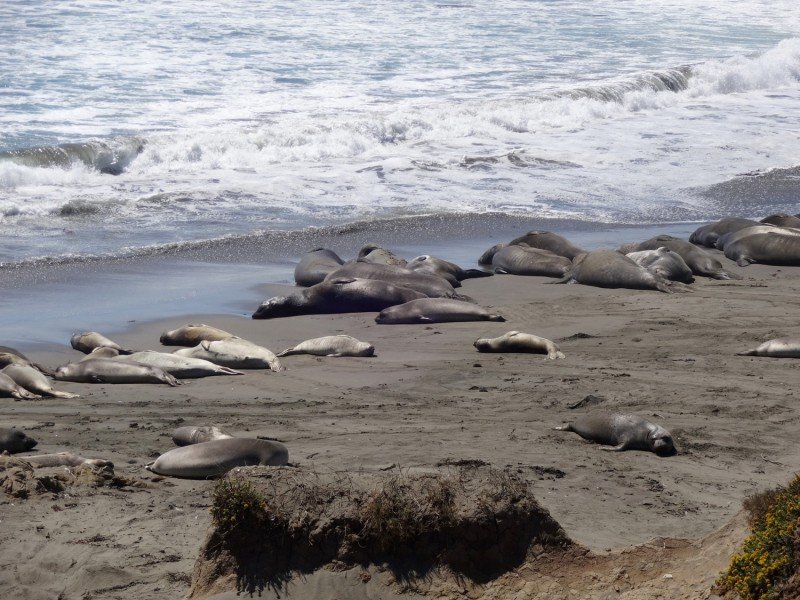
If you've ever dreamt of driving what is arguably the most beautiful coastal road in the world, head to California, hire a car and set aside two to three days. Here, flashy mansions in Orange County, sandy beaches, endless palm trees, rolling dunes, forests of giant redwoods, granite cliffs breaking rough waves and charming little towns like Carmel-by-the-Sea and the university city of Santa Barbara all await. With a little luck, you might even spot seals or whales. The entire route, which also passes through Los Angeles and San Francisco, covers 1,055 kilometres. Take your time to soak up the beauty and admire the many fantastic sights along the way.
Starting in the South
The highway begins from the southern end at Dana Point. From here, the road passes through Orange County — famous not only for the TV series The O.C. but above all for stunning beaches such as Newport Beach and Laguna Beach, as well as for boundless wealth and sprawling mansions. Next come the finest beaches of Los Angeles County, including Hermosa Beach and Manhattan Beach. In Los Angeles, the highway even meets Route 66 at the Santa Monica Pier. Leaving the buzzing metropolis of Los Angeles behind, the road winds through the magnificent California countryside all the way north to San Francisco.
Ventura and Santa Barbara
A good place to stop is Ventura, home to the longest wooden pier in California. A surfer's paradise, the secluded San Buenaventura State Beach invites long walks and leisurely sunbathing. The next stop should be Santa Barbara. Here, you might wonder whether you're really still in America or have somehow ended up in Andalusia. Following a devastating earthquake in the 1920s, this small city of around 90,000 residents was rebuilt in a uniform style and today charms visitors with its Mediterranean flair and its multi-award-winning beaches — among the finest in California.
Morro Bay and a Dream Castle
The highway around the coastal town of Morro Bay is defined by beautiful dune landscapes. Morro Bay itself is particularly famous for Morro Rock, a nearly 180-metre-high stone that rises dramatically from the water. In San Simeon, Hearst Castle awaits. The former media tycoon William Randolph Hearst had this extravagant estate built for himself in the 1920s. Today, it is one of the major tourist attractions along the scenic coastal road. You can stop here to browse the souvenir shop, take in the views and enjoy the restaurant, or choose from a range of guided tours.
Big Sur
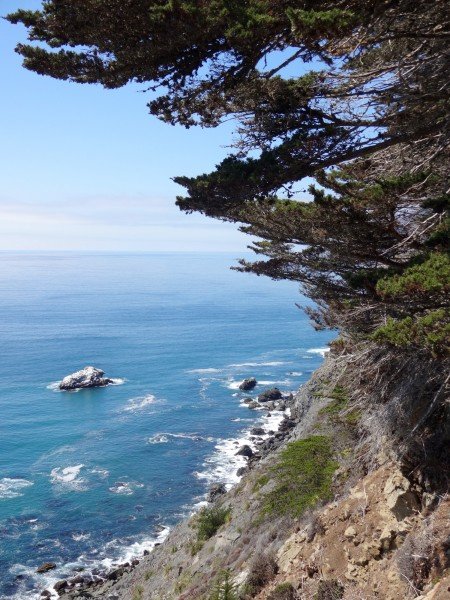
Now comes the — justifiably — most famous stretch of the route: the Big Sur coast. Here, mountains and ocean collide, and sea lions can often be spotted. You can pull over at any of the viewpoints for stunning photos, though if you stop at every single one, you'll be there for an eternity. This section offers very few opportunities to refuel or pick up supplies, so make sure to do so beforehand. That said, the clifftop restaurant Nepenthe awaits your visit. Perched 240 metres above sea level, you can enjoy a fantastic panorama and the breathtakingly romantic landscape — and if you bring binoculars, you might even catch whales or dolphins in action.
An English Ambience
The next worthwhile stop — and a wonderful place to spend the night — is the charming little town of Carmel-by-the-Sea. Known as an upmarket destination, it feels more like an English village, and the coastline is shaped by rugged rocks of the kind you would otherwise only find in England. Exclusive restaurants and luxury hotels await, with not a fast-food chain in sight.
Finishing in the North
The next towns worth visiting are Monterey and Santa Cruz, both well-known tourist hotspots offering plenty of cafés, restaurants and a lively nightlife. The Monterey Bay Aquarium in particular is world-famous and virtually without equal anywhere on the planet — a must for the whole family. As you follow the two-lane highway, you'll repeatedly wind through canyons, and you won't be able to deny that unmistakable feeling of adventure and freedom. The next destination is San Francisco, the stunning metropolis with its hippie past. From there, you can continue north as far as Garberville, where you can switch to Highway 101.
Historical Information
As early as 1894, there was talk of building a road to connect the coastal towns. Dr John L. D. Roberts, a physician living in Monterey at the time, spent so long travelling by horse and carriage that he became determined to build a road all the way to San Simeon. Once he managed to convince the then senator from Cambria — who in turn persuaded the state that the road was needed for military reasons — 1.5 million dollars were made available for its construction. The First World War delayed the work, so official construction did not begin until 1922. Many workers lost their lives during the build due to the rocky and steep terrain.
By 1937, the coastal road between San Simeon and Carmel had been completed, requiring the construction of 32 bridges. On 27 June, the road was officially inaugurated under the name "Carmel–San Simeon Highway", though it was better known as the "Roosevelt Highway" in honour of the president. Since 1939, the entire route from Dana Point to just before the town of Garberville has been designated California Highway 1.