

Description
New Zealand's Largest National Park
Covering over 12,500 square kilometres, Fiordland National Park is New Zealand's largest national park. The area encompasses the mountainous southwestern tip of the South Island and thus the greater part of the Fiordland region — the most sparsely populated region in New Zealand. While the west coast is defined by numerous fjords, such as Milford Sound and Doubtful Sound, the east is characterised by an extensive lake district. Roughly half a million visitors explore Fiordland National Park each year. The main season runs from October to April, with the northwestern area around Te Anau and Milford Sound being particularly popular with tourists.
A Breathtaking Natural Backdrop
Stunning fjords, spectacular waterfalls and imposing peaks make the national park one of the most beautiful areas in the country. The ancient rainforests clinging to the mountain slopes are home to a rich diversity of flora and fauna. The western side of the mountain range, which rises to 2,746 metres, is one of the wettest places on Earth. Amateur ornithologists can also discover numerous bird species in the national park, including the South Island takahē, Fiordland crested penguins and New Zealand fur seals.
Activities in Fiordland National Park
Hiking
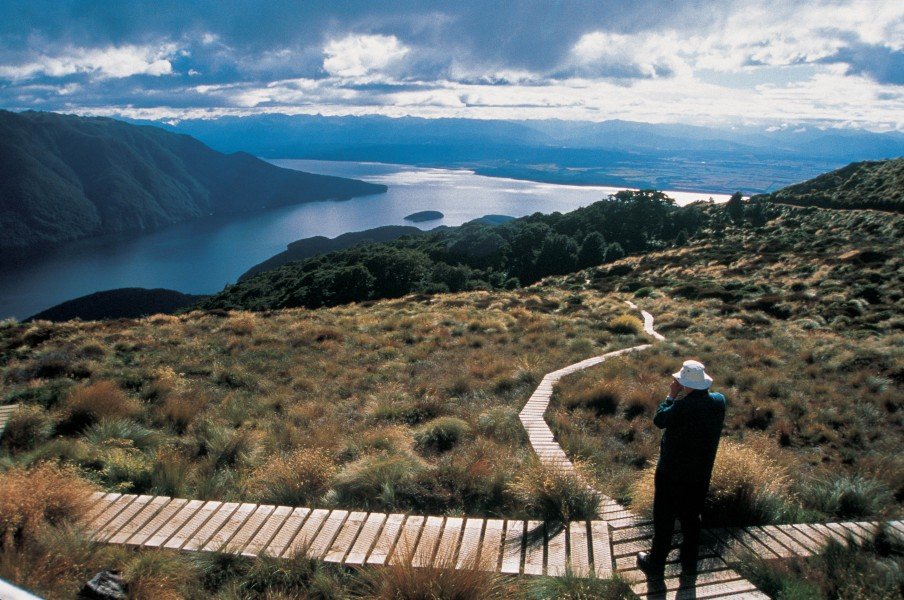
A total of 648 kilometres of hiking trails wind through Fiordland National Park. Alongside numerous short routes, the area can also be explored on several multi-day treks. Particularly popular in New Zealand are the famous "Great Walks", three of which pass through Fiordland National Park. The Milford Track, the Routeburn Track and the Kepler Track promise unique experiences in unspoilt nature. There are also many lesser-known trails that are no less spectacular.
Kayaking, Fishing and Diving
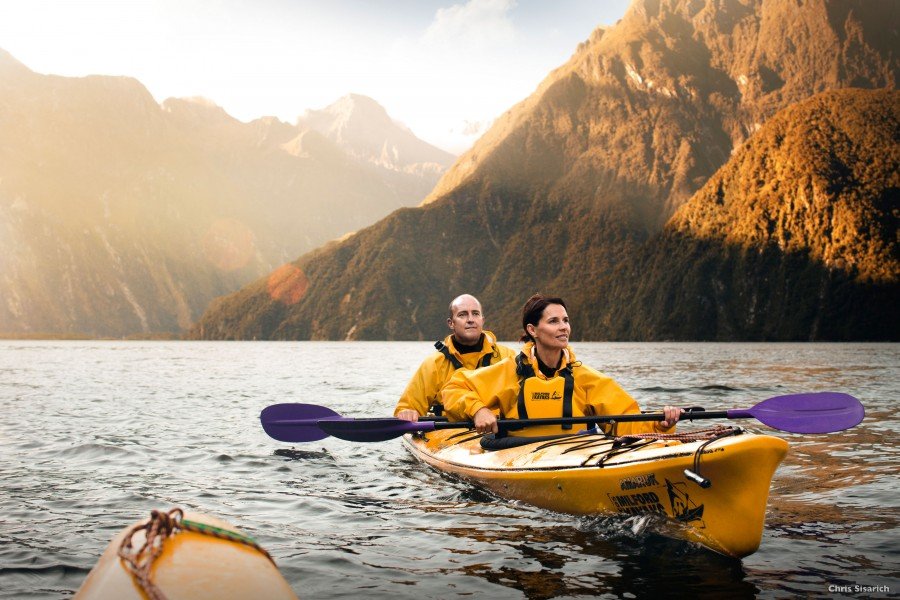
Some of the fjords and lakes can be explored by kayak or canoe. Lake Te Anau and Lake Manapouri are particularly popular with anglers, not least because of the wild trout found there. Divers can observe deep-sea plants in the fjords that only grow close to the surface here. Encounters with dolphins, fur seals or penguins are also possible. At Milford Sound, there is even a dry-access underwater observatory. A civilian submarine also offers fascinating dives.
Boat Tours and Scenic Flights
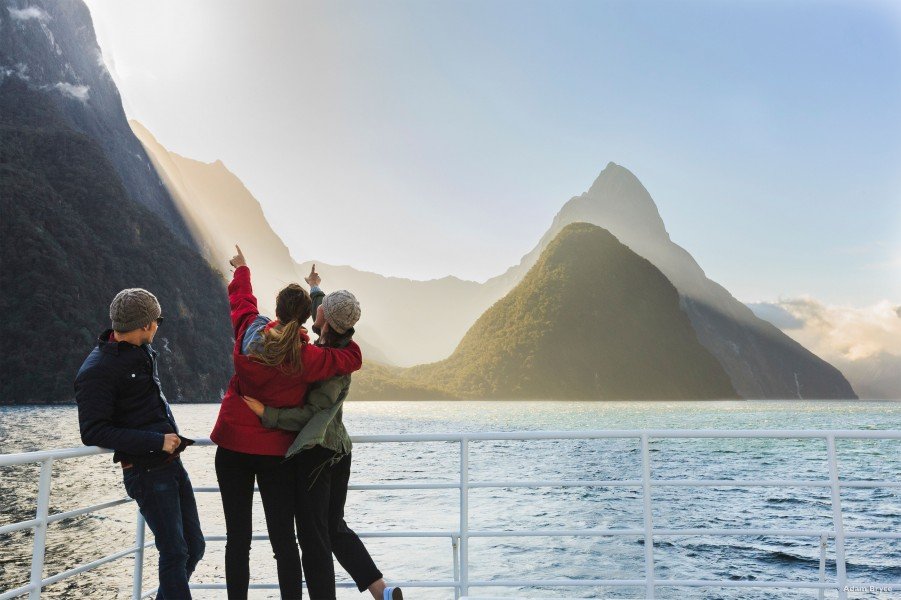
Boat tours are offered on Milford Sound, allowing visitors to take in the surrounding nature from the water and be captivated by its pristine beauty. In Te Anau and Manapouri, tours through less accessible fjords are also available. From the air, too, the landscape of Fiordland National Park provides a spectacular sight.
Scenic Highlights
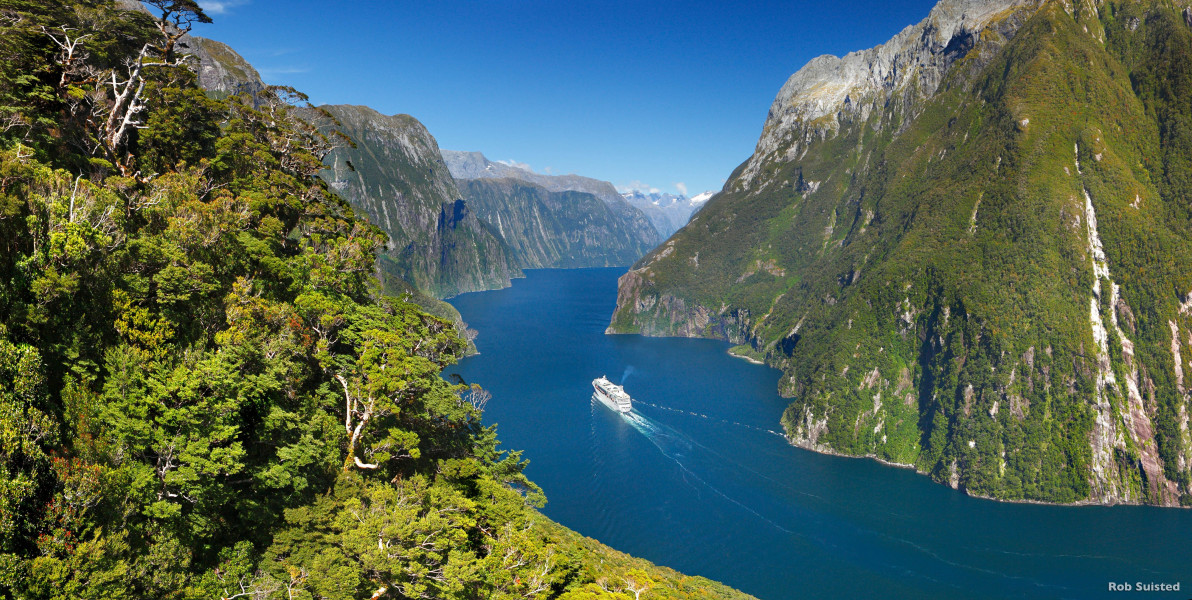
Among the landscape highlights of the national park is Milford Sound. The 16-kilometre-long fjord was even described as the eighth wonder of the world by the poet Rudyard Kipling, on account of its rugged beauty. Doubtful Sound — at 421 metres New Zealand's deepest fjord — is equally a true natural paradise. Bottlenose dolphins, fur seals and penguins find a suitable habitat here.
Historical Information
Fiordland National Park was established in 1952 and, since 1990, has formed part of the Te Wahipounamu World Heritage Area (a UNESCO World Natural Heritage Site) together with Westland, Mount Cook and Mount Aspiring national parks and several smaller protected zones. The name Te Wahipounamu refers to the prized mineral of the region and translates as "the place of greenstone".
Fjords Thousands of Years Old
Far older than the national park itself are the fjords. These U-shaped valleys, carved by glaciers and flooded by the sea, took roughly 100,000 years to form. The finishing touches to the 14 fjords at the country's southwestern corner were added by the most recent ice age, around 10,000 years ago. According to Māori belief, the fjords were created by the giant stonecutter Tū Te Raki Whānoa, who chiselled the steep valleys from the rock with an adze.
Settlement History
The area — to this day the most inaccessible part of New Zealand — is only sparsely settled. While the earliest Māori hunted fish and other animals here and collected jade from the rivers, they never truly established permanent settlements in the region. Much later, European seafarers and whalers sought shelter in the fjords and built the first small settlements. Due to the predominantly steep and difficult terrain, the region's extraordinary remoteness and the wet climate, however, only the hardiest of settlers have ever made this place their home.
Interesting facts
- Fjordland National Park is among the 10 best rated Tourist Attractions in New Zealand.
How to get there
Te Anau, with around 2,000 residents, is the largest town in the region. It is most easily reached via SH 94. From Queenstown, follow SH 6 southward and change at Lowther via SH 97 onto SH 94, which leads all the way to Te Anau. Milford Sound can also be reached via SH 94.