
Description
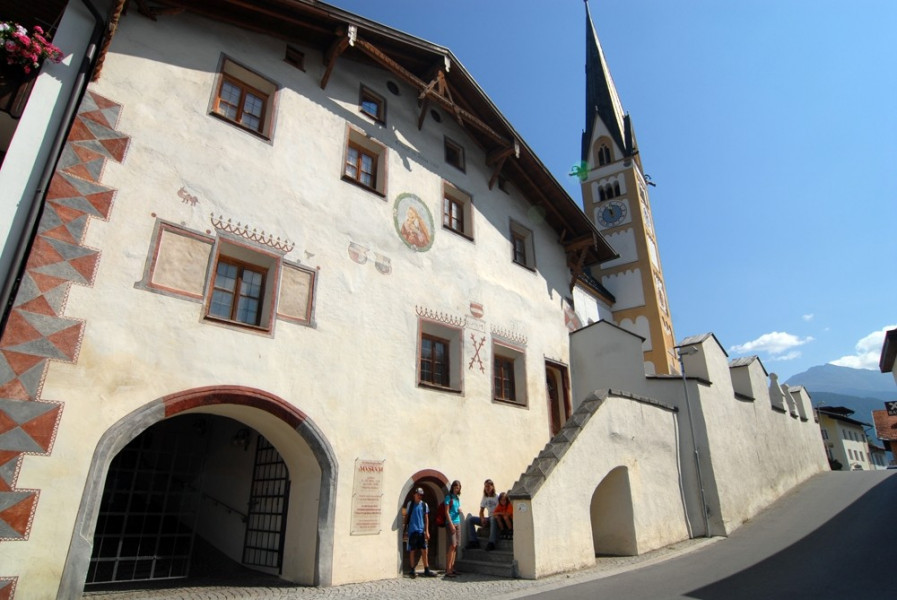
Discover history in the oldest and one of the most modern buildings in Fließ—that’s what the two museums along the Via Claudia Augusta offer. The museum is considered the cultural hub of the Bronze and Iron Ages in the Tyrolean Oberland. Behind the historic façade, an even more ancient era unfolds in all its splendor.
Fließ Archaeological Museum
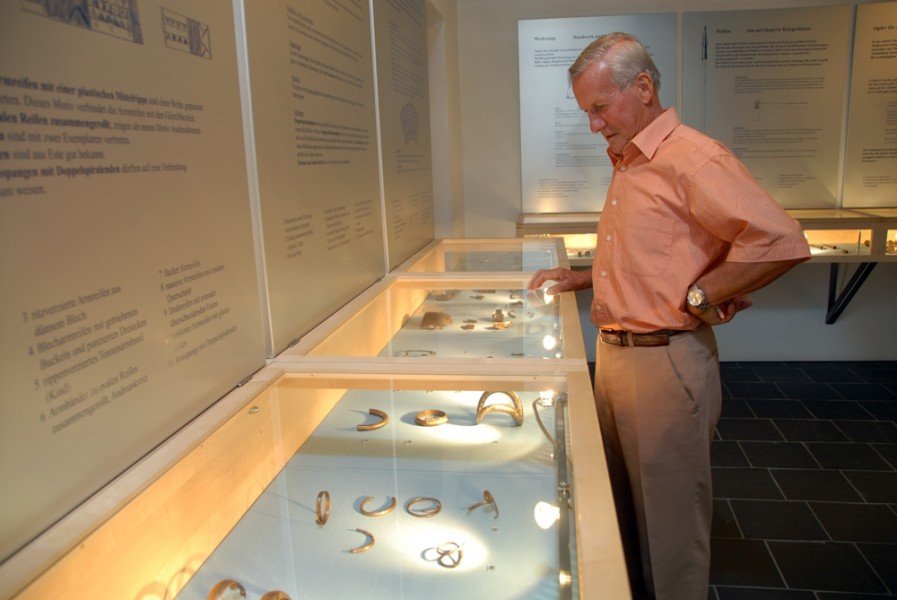
In the oldest and at the same time one of the most modern buildings in Fließ, you can experience the fascinating early history of the Tyrolean Oberland up close. The foundation for the museum was laid by a chance discovery: in 1990, farmer Josef Kathrein discovered a Hallstatt-period bronze hoard containing 386 objects during construction work in the village—one of the most significant finds of its kind in the entire Alpine region. In addition to brooches, arm and leg rings, vessels, weapons, and tools, the artistically decorated belt plates are considered particularly valuable from a cultural-historical perspective.
Just one year later, Kassian Erhart and Franz Neururer stumbled upon a Bronze Age–Iron Age sacrificial site on the Pillerhöhe near the “Gachen Blick.” The sacrificial rituals began in the Middle Bronze Age (ca. 1600–1200 BCE) and lasted for over 1,000 years—during the Roman period, coins were the primary offerings. In 2001, another sensational discovery was made: At the nearby Moosbruckschrofen, Franz Neururer discovered a hoard of 350 bronze objects from the period around 1550–1330 BCE beneath a stone slab, including a fragment of a comb helmet, which is considered one of the oldest helmets in Europe
Via Claudia Augusta Documentation Center
The Via Claudia Augusta Documentation Center is dedicated to the famous Roman imperial road that once connected the south with the north of the Alps. The display cases feature artifacts recovered along the historic route. A particular highlight is the replica of the Tabula Peutingeriana—the only surviving road map from Roman times.
Plan Your Visit
The museum can be visited without an appointment. During each visit, guests are treated to a personal guided tour by a member of the museum staff (approx. 30–45 minutes). Those with more time can book the “full program”: a museum tour, a guided tour of the Maaß Church, and coffee and snacks—in any order. Upon request, the film “Crispus Greets Julia” is also shown, which tells the story of a Roman merchant’s journey along the Via Claudia Augusta. The extended program lasts approximately 3 hours; dates and prices available upon request.
For school groups, there are three themed tours: In “Offerings to the Gods” (approx. 1 hour), children explore the history of the sacrificial site and search for the originals in the display cases. “Water Birds Pull the Sun” (approx. 45 minutes) lets them discover prehistoric craft techniques and create their own piece of jewelry using the punch-marking method. In “With Crispus in the Footsteps of the Romans” (approx. 1 hour), the focus is on the Via Claudia Augusta, including a film and quiz.
Also worth a visit: The Brandopferplatz on the Pillerhöhe is designed as an open-air museum and is open to the public at any time.
Interesting facts
- The day pass at Archaeological Museum Fliess is €8 making it one of the 10 cheapest tourist Attractions in Austria.